
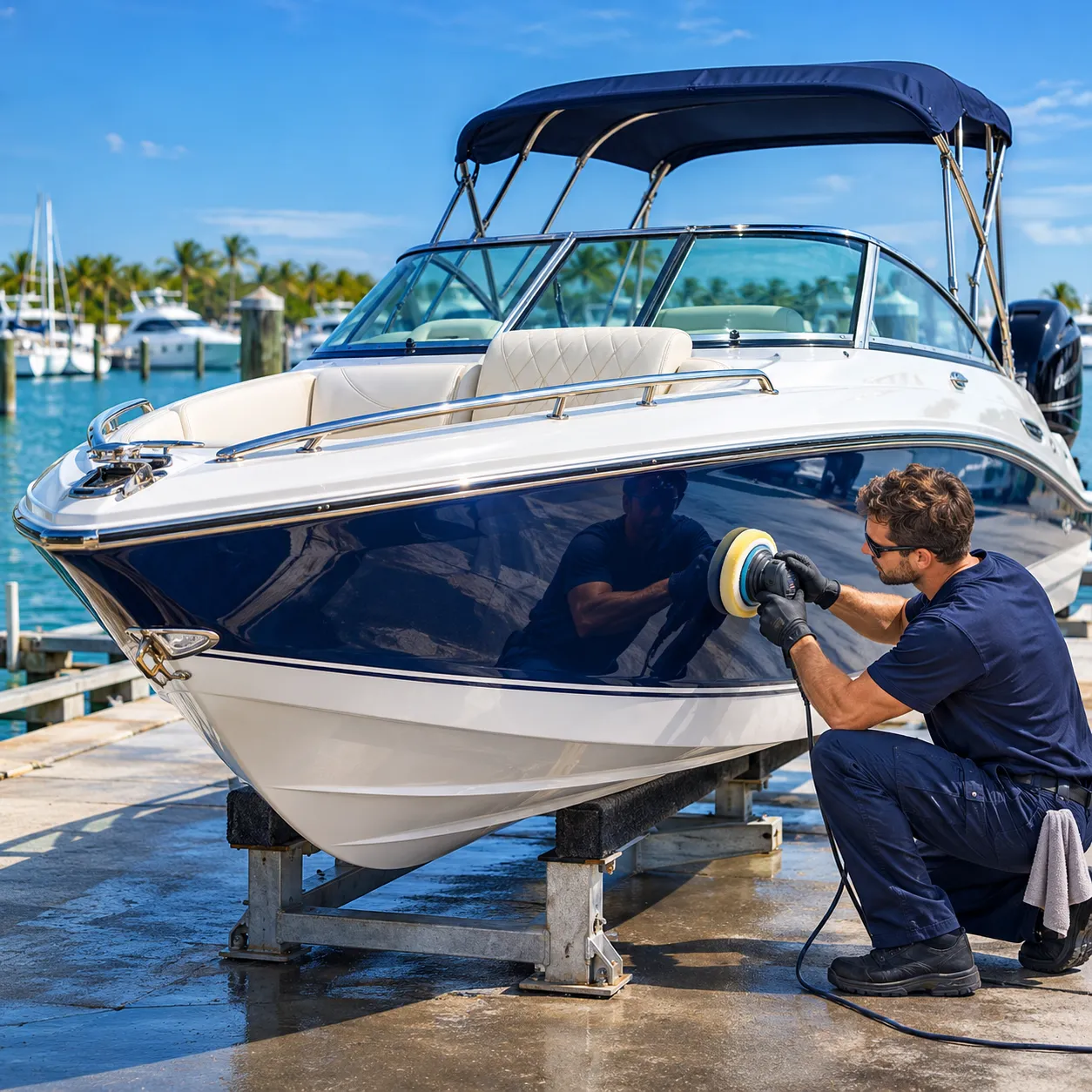
Smart boat owners know that structural hull integrity and cosmetic condition matter far more to a vessel’s seaworthiness and resale value than extra horsepower under the hood. In an increasingly competitive pre-owned market, the physical condition of a recreational boat is the single biggest factor buyers weigh, according to the National Marine Manufacturers Association (NMMA), which reported 15.2 million recreational boats operating across the U.S. in 2025.
“Repowering” — replacing the engine for better performance — is a favorite move among performance-focused owners, but spending that money on a poor hull is a costly financial mistake. Owners who aren’t marine-restoration experts themselves can avoid that pitfall entirely by relying on experienced boat services Austin owners trust, alongside reputable regional marine body shops, before ever touching the motor.
Key Takeaways
- Better equity protection: Neglected, oxidized gelcoat and hull wear can devalue a boat by 15–25% at resale, while mechanical repowering typically recovers only 60–80% of its installed cost.
- Primary claim risk: Collision and impact incidents account for 38–46% of marine insurance claims, compared with just 11% for mechanical breakdowns.
- Structural prerequisites: Unrepaired surface cracks can let water seep into fiberglass laminates, leading to a five-figure structural rebuild.
Exterior Restoration vs. Engine Repowering
The financial and risk-exposure data make a clear case for why structural and cosmetic preservation should come before mechanical upgrades for the typical recreational boater.
| Investment Factor | Exterior & Hull Restoration | Engine Upgrade / Repower | Primary Industry Source |
|---|---|---|---|
| Resale Value Impact | Retains 15–25% more market value | Recovers 60–80% of installed cost | Catalyst Marine Services / SeaRepair |
| Primary Claim Frequency | Impact/collision claims: 38–46% | Mechanical failure claims: 11% | BoatUS and Travelers Insurance | |
| Insurance Policy Coverage | Sudden collision: covered. UV wear: excluded. | Mechanical breakdown: requires add-on riders | Marine Underwriting Standards |
| Asset Lifespan | Hulls can last 30+ years | Outboards lose significant value within 10–15 years | MyDepreciation Valuation Data |
Hull Integrity Outweighs Raw Horsepower
A marine engine is an asset that depreciates with age, while a composite fiberglass or welded aluminum hull is the true foundation of the boat’s value. Valuation experts at marine industry data provider MyDepreciation note that high-grade hulls routinely outlast the electronics and engines mounted to them, which are often rendered “technically outdated” long before the hull itself fails.
UV Gelcoat Degradation
Micro-pores in the gelcoat open up under sun exposure, allowing moisture to seep into the fiberglass laminates beneath.
Internal Rot
Once water reaches wooden or composite stringers and transoms, rot sets in — and left unaddressed, it can turn into a five-figure rebuild.
Torque Stress Limits
Mounting a heavier, higher-horsepower outboard onto a weakened transom puts serious stress on structural limits, directly affecting on-water safety.
Gelcoat Neglect Slashes Resale Valuation
The consequences of surface neglect show up long before a boat ever reaches the brokerage dock. Oxidized gelcoat, stained non-skid decks, and corroded deck hardware regularly depress a boat’s market value by 15–25%, according to marine resale data published by Catalyst Marine Services.
A boat’s exterior condition acts as an instant signal of how well it’s been maintained. An owner who installs a brand-new outboard but leaves chalky oxidation and dock rash untouched is still signaling deferred maintenance — and will likely end up lowering the asking price or absorbing months of extra carrying costs while the boat sits unsold at the dock.
Insurance Data Highlights Impact Risks
Owners face a far greater risk of financial loss from collision and impact damage than from mechanical failure. Combined data from more than 240,000 policies, reported by BoatUS and Travelers Insurance, shows that collision and impact claims make up 38–46% of all marine insurance claims, while mechanical breakdowns account for just 11%.
Marine insurance policies also typically exclude wear and tear, osmosis blistering, and deterioration caused by neglecting the vessel’s exterior. Addressing hull or deck cracks, keel abrasions, and trailer-bunk damage before they worsen helps keep a boat eligible for an Agreed Value insurance policy and avoids depreciation penalties.
Trailer Support Protects Hull Geometry
Every trip down the highway puts stress on a boat’s hull — and a misaligned or corroded trailer accelerates that damage over time. Marine surveying standards from the American Boat and Yacht Council (ABYC) note that worn rollers and poorly adjusted bunk boards create excessive pressure points, which can warp fiberglass hulls and dent aluminum pontoons.
Bunk Board Alignment
Hull scratching is avoided during steep out-and-back retrieves on launch ramps using Rotted Wooden Bunks and Worn Marine carpet repair.
Load Distribution
Well-balanced rollers and crossmembers help prevent road-vibration stress cracks from forming along the keel and chines.
Corrosion Prevention
Regularly inspecting welds, winches, and bow stops helps keep the vessel properly positioned and prevents it from shifting onto fresh gelcoat.
Structural Restoration Precedes Engine Upgrades
Before upgrading a boat’s propulsion system, Transport Canada’s official recreational boating safety guidance recommends checking hull integrity, steering systems, and structural fittings first. Industry repair benchmarks from SeaRepair indicate that new engines typically retain only 60–80% of their installed value at resale, while consistent exterior maintenance can return up to four times that value in equity.
Before repowering, owners should have their hull, transom, and trailer undergo a complete structural check. Addressing collision damage, pontoon damage, and faded gelcoat with trusted boat services Austin specialists ensures the vessel can safely handle modern engine torque — and sell for the strongest possible price when the time comes.
Final Thoughts
Prioritizing exterior boat restoration keeps a vessel from becoming a money pit and turns it into a protected long-term investment instead. Shielding aluminum hulls and fiberglass laminates from UV exposure and impact wear preserves structural safety while boosting buyer demand down the line. Once the foundation is solid, any mechanical upgrades made afterward are far more likely to pay off at resale.
Frequently Asked Questions (FAQs)
1. Why should boat owners prioritize exterior restoration over engine upgrades?
Exterior and hull condition has a much bigger impact on resale value and insurability than engine performance. Neglected gelcoat and hull wear can cut a boat’s market value by 15–25%, while a new engine typically recovers only 60–80% of its installed cost at resale.
2. What causes the most boat insurance claims — collisions or mechanical failure?
Collision and impact damage account for 38–46% of marine insurance claims, according to combined data from BoatUS and Travelers Insurance covering over 240,000 policies, compared with just 11% for mechanical breakdowns.
3. Does marine insurance cover gelcoat wear and UV damage?
Generally, no. Marine insurance policies typically cover sudden collision damage but exclude gradual wear and tear, UV degradation, and osmosis blistering, which is why proactive exterior maintenance matters for staying eligible for an Agreed Value policy.
4. How does trailer condition affect a boat’s hull over time?
Worn rollers and poorly adjusted bunk boards create uneven pressure points during transport, which can warp fiberglass hulls and dent aluminum pontoons. Regularly checking trailer alignment, welds, and bow stops helps protect the hull’s structural geometry.
5. Should I restore my boat’s exterior before or after upgrading the engine?
Before. Industry guidance recommends a full structural check of the hull, transom, and trailer before repowering, since a weakened transom may not safely support a heavier, higher-horsepower outboard, and exterior restoration generally returns more value than an engine upgrade.