

Anyone shopping for a piano today walks into a market that looks almost nothing like it did even fifteen years ago. The old assumption — new acoustic piano or nothing worth having — has quietly given way to a much wider range of options, and a lot of buyers still shop as though those older rules still apply. That mismatch between expectation and reality causes more disappointment, and more overspending, than almost anything else in the buying process.
Acoustic Pianos Still Hold Value, Just Not the Way People Think
There’s a persistent belief that acoustic pianos are always the “real” instrument and everything else is a compromise. That belief isn’t entirely wrong, but it oversimplifies a market where a well-maintained instrument’s condition matters enormously more than whether it happens to be new. A piano that’s been regularly tuned, kept in a stable climate, and serviced by a competent technician can sound and play beautifully decades after it left the factory, while a neglected newer instrument can feel disappointing within a few years.
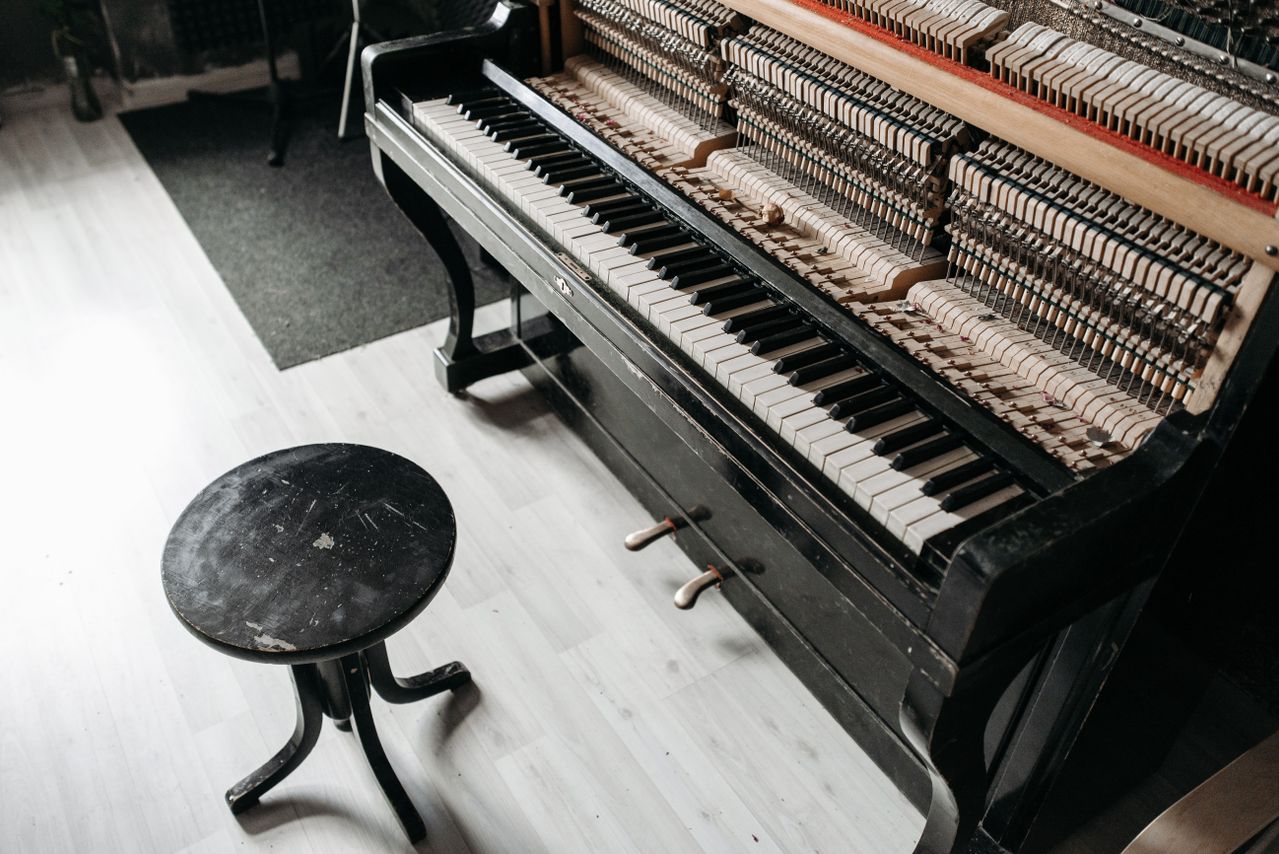
This is exactly why the market for used pianos has grown so much more sophisticated than it used to be. Buyers who understand what to look for — action responsiveness, soundboard condition, whether the piano has been in a humidity-controlled environment — can find instruments that outperform new pianos at a fraction of the price. The risk, and it’s a real one, comes from buying sight unseen or skipping an inspection by someone who actually knows what they’re evaluating. A piano with hairline cracks in the soundboard or a warped frame can look fine in photos and play terribly in person, so the due diligence step isn’t optional no matter how good a listing looks online.
Provenance matters more in this market than a lot of first-time buyers expect, particularly for older instruments that have passed through several owners. A piano’s climate history — whether it spent decades in a humid basement or a stable, climate-controlled living room — affects its structural condition far more than its age alone would suggest. Buyers who ask pointed questions about an instrument’s storage history, and who arrange for a technician’s evaluation before finalizing a purchase, protect themselves from the kind of expensive surprise that only becomes apparent once a piano has already been moved into a new home and the true extent of hidden damage reveals itself.
Digital Pianos Have Closed a Gap That Used to Be Enormous
Ten years ago, digital pianos were an obvious downgrade for anyone serious about playing. That gap has narrowed dramatically, and in some respects it’s closed almost entirely for certain use cases. Modern hybrid instruments use actual wooden keys and graded hammer action, meaning the physical feel under a player’s fingers closely mimics an acoustic instrument rather than the springy, uniform resistance of older digital keyboards.
Yamaha’s Clavinova line has become something of a reference point in this conversation, and for good reason. A Yamaha Clavinova piano combines that improved touch response with sampled sound generated from actual concert grand pianos, which is a meaningfully different experience than the synthesized tones digital instruments relied on a generation ago. Which brings me to a practical point that matters for a lot of households: a digital instrument like this doesn’t require tuning, holds its calibration regardless of humidity swings, and can be played with headphones at any hour without disturbing anyone else in the house. For apartment dwellers or families with inconsistent practice schedules, that combination of benefits often outweighs whatever remains of the acoustic-versus-digital gap.
The tradeoff, and there is one, sits mostly in the subtleties of dynamic control that advanced players eventually notice — the way a truly skilled pianist can shape tone through touch in ways that even excellent sampling doesn’t fully replicate. For most players, especially those still developing technique, that difference simply isn’t the deciding factor it once was.
Hybrid Instruments Are Carving Out Their Own Category Entirely
Somewhere between a traditional acoustic piano and a fully digital instrument sits a category that’s grown substantially in recent years: hybrid pianos that pair a real acoustic action and hammers with digital sound generation and silencing capability. These instruments let a player practice silently through headphones while retaining the actual mechanical touch of hammers striking strings, or in some designs, striking nothing at all while triggering a digital sample instead.
The Yamaha Disklavier price point sits considerably higher than either a standard acoustic or a straightforward digital instrument, and that cost reflects genuinely different engineering — these are player pianos capable of recording and playing back a performance with full dynamic nuance, reproducing not just which notes were played but exactly how hard and how long each key was held. For serious students, teachers building a practice studio, or households wanting one instrument that serves multiple purposes, that price tends to make more sense than it does for a casual buyer who mainly wants something functional in the living room.
What Buyers Should Actually Weigh Before Deciding
The right choice depends far more on how and when someone actually plays than on assumptions about which category is inherently better. A family with young kids taking early lessons, practicing at inconsistent hours, probably gets more real value from a well-built digital or hybrid instrument than from an acoustic piano that requires regular tuning and can’t be silenced during a toddler’s nap time. A serious student preparing for conservatory auditions, on the other hand, eventually needs consistent time on an acoustic action to develop the touch sensitivity that digital instruments, even excellent ones, still approximate rather than fully replicate.
Budget matters too, obviously, but not in the straightforward way people assume going in. A quality used acoustic can often be had for less than a mid-range digital instrument, while a top-tier hybrid can cost more than several decent acoustic pianos combined. Shopping by category alone, without weighing how the instrument will actually be used day to day, is how a lot of buyers end up with something that technically fits their budget but doesn’t fit their household.
None of these categories is disappearing anytime soon, and none of them is objectively the right answer for every buyer. The market has simply gotten wide enough that the old binary — acoustic or nothing — no longer describes how most people are actually shopping, or how they should be.
Ongoing Costs and Placement Considerations
Ongoing maintenance costs deserve more attention in this comparison than they usually get during the initial purchase decision. An acoustic piano needs professional tuning at minimum once or twice a year to stay in proper pitch, and that recurring cost adds up over the years a family owns the instrument. Digital instruments avoid that particular expense entirely, though they carry their own long-term consideration in the form of eventual technology obsolescence — a digital piano purchased today will still play the same notes in fifteen years, but its features and sound engine will feel dated compared to whatever’s come out in the meantime, a tradeoff acoustic instruments simply don’t face in the same way.
Placement within a home matters more for acoustic and hybrid instruments than most buyers anticipate before delivery day arrives. Humidity swings near an exterior wall, direct sunlight through a window, or proximity to a heating vent can all accelerate wear on wood components and affect tuning stability over time. Buyers who plan an instrument’s location with these environmental factors in mind, rather than simply choosing wherever looks best in the room, tend to get considerably more years of stable performance out of an acoustic or hybrid piano than those who prioritize aesthetics over climate considerations.
Final Thoughts
The old “acoustic or nothing” mindset simply doesn’t reflect how the piano market actually works anymore. Between well-maintained used acoustics, genuinely capable digital instruments like the Yamaha Clavinova line, and hybrid options at the Disklavier price point, buyers have more legitimate paths to a good instrument than at any point in recent memory. The right choice comes down to how and when the instrument will actually be played, not which category sounds most impressive on paper.
Frequently Asked Questions (FAQs)
1. Is a used acoustic piano better than a new digital piano?
It depends on the instrument’s condition and how it will be used. A well-maintained used acoustic can outperform a new digital instrument in touch and tone, but a neglected acoustic with a damaged soundboard or warped frame can play worse than a quality digital piano. Condition and inspection matter more than the new-versus-used label alone.
2. What is the difference between a digital piano and a hybrid piano?
A digital piano uses a fully electronic keyboard action to simulate the feel of playing, while a hybrid piano pairs a real acoustic action and hammers with digital sound generation and silencing capability, giving players genuine mechanical touch with the option to practice silently through headphones.
3. Does a Yamaha Clavinova piano need tuning like an acoustic piano?
No. A Yamaha Clavinova piano is a digital instrument, so it doesn’t require tuning and holds its calibration regardless of humidity changes, unlike an acoustic piano that typically needs professional tuning once or twice a year.
4. Why is the Yamaha Disklavier price so much higher than a standard digital piano?
The Yamaha Disklavier price reflects genuinely different engineering — it’s a player piano capable of recording and playing back a performance with full dynamic nuance, capturing exactly how hard and how long each key was held, which is significantly more complex technology than a standard digital keyboard.
5. What should I check before buying a used piano?
Check action responsiveness, soundboard condition (looking for hairline cracks), and whether the piano has been kept in a stable, humidity-controlled environment. Always arrange an inspection by a qualified piano technician before finalizing a purchase, since issues like a warped frame can look fine in photos but play poorly in person.